What is a 'part' in NLP?
A part is a sub-personality that carries a distinct intention, often in conflict with another part. When a client says "part of me wants X, but part of me wants Y", NLP takes the metaphor literally for the purpose of intervention.
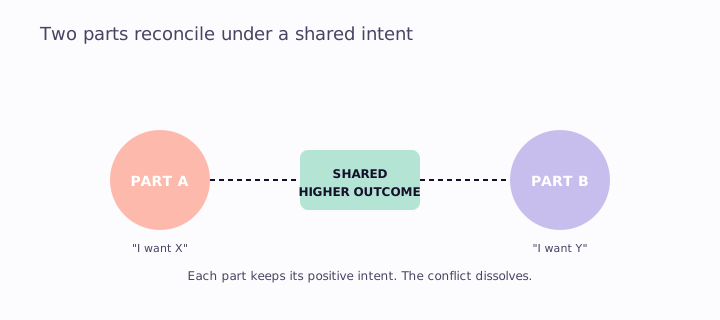
The premise: internal conflict is rarely random. The two pulls each serve a need. Suppressing one ("just push through") works briefly and rebounds. Resolving the conflict requires honoring both intentions and finding a shared outcome both parts can serve.
The classic 7-step protocol
- Identify the conflict. Get the client to state the two pulls clearly. "Part of me wants to leave; part of me wants to stay."
- Externalize the parts. Place each part on a hand or in a specific spot in the room. Make them concrete and addressable.
- Surface each positive intention. Ask each part: "What positive thing are you trying to do for [client name] by wanting this?" Keep chunking up until the intention is something the other part can also value.
- Find the shared higher outcome. At some level of abstraction, both parts want the same thing (safety, growth, love, integrity). That shared outcome is the integration point.
- Negotiate. Each part recognizes the other is trying to serve the same higher outcome. Both contribute resources.
- Integrate. Bring the hands together slowly; let the parts merge. The client should feel the integration physically, not just intellectually.
- Future-pace. Imagine specific upcoming situations and notice how the integrated self responds differently.
Worked example
Client: "Part of me wants to quit my job and start my own thing; part of me wants to stay where I am."
- Entrepreneurial part's intention: autonomy and meaningful work.
- Staying part's intention: financial security and respect for past commitments.
- Chunk up: both parts want a life the client can be proud of and that supports the people who depend on them.
- Integration: a plan that builds the entrepreneurial path while honoring the financial responsibilities - a deliberate transition, not a binary jump.
The client did not change which option they chose; they changed the level at which they were holding the question.
When parts integration is the wrong tool
- Genuine trauma fragments. Parts that emerged from significant trauma need clinical support (IFS, EMDR), not a coaching protocol.
- Identity-level conflict ("who am I really?") often needs longer work than a single session.
- Conflicts that are actually external. If the conflict is really about another person's demands, parts work alone will not resolve it.
Frequently asked questions
Are 'parts' real?
NLP treats parts as a working metaphor that lets you intervene on internal conflict. Whether they correspond to literal sub-personalities is not the question; the question is whether treating them as if they do produces better outcomes. Usually it does.
How is parts integration different from IFS?
Internal Family Systems (IFS) is a structured clinical model with named part types (managers, exiles, firefighters, self). NLP parts integration is leaner and intervention-focused. The mechanics overlap; IFS is the clinical sibling, NLP parts work is the coaching cousin.
How many parts can you work with at once?
Two at a time for classical NLP parts integration. More parts usually means iterating through pairs or moving to a different framework like IFS.
What if the parts won't agree?
Climb one level higher. Each part has a positive intention; both intentions usually serve a deeper shared value. Find the shared value and the agreement tends to follow.
Can parts integration cause harm?
In the wrong hands, yes. Forcing integration without genuine agreement, or working with parts that represent deeper trauma without expert support, can leave the client more fragmented than they started. Refer when in doubt.
How long does parts integration take?
A single internal conflict typically resolves in 45-90 minutes. Recurring or identity-level conflicts may require several sessions.
DIRECTORY
Find a parts-integration trainer
Most certified Master Practitioners teach parts integration as a core method.