What is a 'state'?
A state is the total internal condition you are in at a moment: physical (posture, breathing, muscle tone), emotional (the felt sense), and mental (internal imagery and self-talk). State is the master variable in NLP - every other intervention either elicits a state, anchors a state, or transfers a state.
State is not a single thing. It is a configuration of components, and the components can be moved.
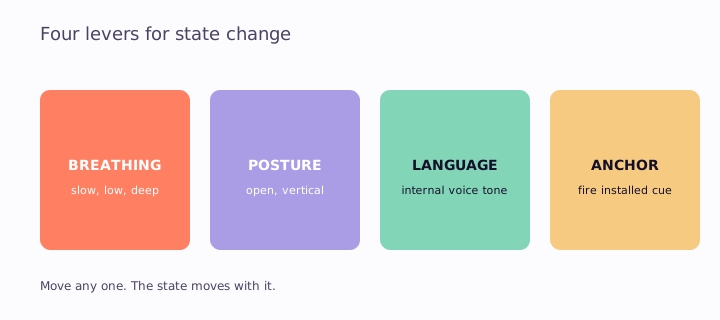
The four levers
Breathing
Slow, low, deep breathing shifts the autonomic nervous system toward parasympathetic. Fast, high, shallow breathing shifts toward sympathetic. The shift can be made consciously in seconds and reads through to the rest of state within a minute.
Posture
Spine vertical, chest open, gaze level. Posture changes state both directly (via proprioception) and indirectly (by changing what is easy to do - it is hard to feel collapsed in a vertical body). Hold the posture; the state follows.
Internal language
The internal voice runs constantly and shapes state. Three sub-levers:
- Content: what the voice is saying.
- Tone: how it is saying it - harsh, kind, urgent, slow.
- Location: where the voice seems to come from.
Shifting any of these shifts state. The fastest fix is usually tone: a kinder internal voice produces a different state regardless of content.
Pre-installed anchor
A previously installed anchor fired in the moment. This is what makes prior anchoring work valuable - in 1 second, you can access a state you previously installed at depth.
The standard 30-second state shift
- Notice the current state. Three breaths to register where you are.
- Choose the target state. Specific: not "better" but "calm and focused".
- Move breathing: 4 seconds in, 6 seconds out, low in the belly.
- Move posture: spine vertical, chest open, shoulders back and down.
- Shift internal voice: speak to yourself the way a respected mentor would.
- Fire an anchor if one is installed for this state.
- Hold for 30 seconds. State settles.
Common state management mistakes
- Trying to think your way to a different state. Cognitive effort alone rarely changes physiology. Move the body first.
- Skipping breath. Of the four levers, breath is fastest and most reliable. Skipping it makes the shift slower.
- Vague target state. "Better" gives the system nothing to move toward. Specific states are accessible; vague ones are not.
- Holding too briefly. A 5-second shift does not settle. 30 seconds at minimum.
- Not testing real conditions. States that work in your office may not survive the meeting. Practice in the conditions where you need them.
Frequently asked questions
What's the difference between state management and emotion regulation?
Emotion regulation usually means managing the experience of an emotion (containing it, expressing it, sitting with it). State management means deliberately moving from one whole-body state to another - the move includes but is not limited to emotion. State management is also typically faster.
Can I learn state management from a book?
You can learn the concepts. The skill is built in the body, and books cannot give feedback on whether your breathing actually shifted or your posture actually opened. Solo practice works for installation; a trainer makes the learning faster.
How fast can you change state?
With practice, in 30 seconds. The four levers - breathing, posture, language, anchor - can all be moved within that window. Sustained state takes longer; the initial shift is fast.
What if I can't feel the state shift?
Two possibilities: the shift is happening but you have low interoceptive awareness (a trainable skill), or the levers are not actually moving (in which case the technique is not being applied). Calibration with a trainer distinguishes these.
Are some states harder to access than others?
Yes. States you have rich reference experiences for are easy to access (most people can find calm; fewer can find genuine playfulness on demand). States you lack references for need to be built rather than recalled.
Can state management replace meditation?
Different tools. Meditation builds general state stability and awareness over time. State management produces specific state shifts on demand. They complement each other; neither replaces the other.
DIRECTORY
Find a state-management trainer
State management is foundational. Pick a trainer who can give you live feedback on your levers.